
The Body's Tale of Mercy & Vengeance
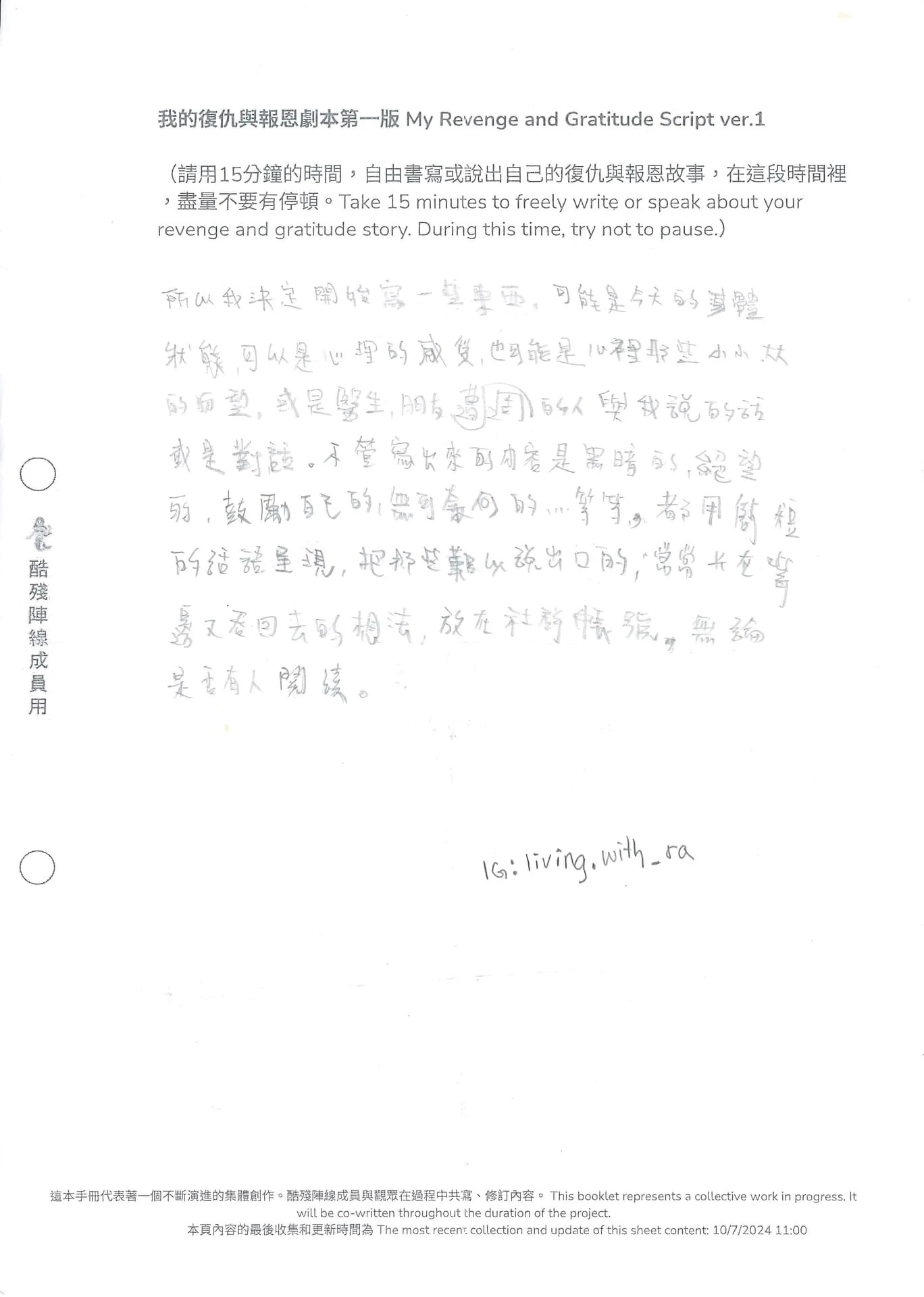

Talk and healing workshop by artist Lee Tzu Tung
At SOLU / Bioart Society
Thursday 28 May, 17–19.30
Address: Panimokatu 1, 00580 Helsinki
Join a feminist fight club and healing workshop hosted by artist Lee Tzu Tung as part of M-Cult’s Everyday Priorities - Art, Technology and Accommodations programme!
This session at SOLU/Bioart Society centres on*The Body's Tale of Mercy & Vengeance* (BOTAMEVE), a feminist fight club inspired by Crip Theory, founded by Taiwanese artist Lee Tzu Tung (they/them). Together, we examine the mercies and harms our bodies endure – whether shaped by sexuality, gender, or disabled realities.
Lee will open with a talk situating BOTAMEVE within their experience of chronic illness, a toxic relationship, and Taiwan's MeToo movement and its legal aftermath. They will share how surviving manipulation became a process of cross-referencing literature to reconstruct their own truth – a pursuit that moves beyond healing toward something that asks for both vengeance and mercy simultaneously. The talk will also reflect on how travelling with this work has led to encounters with diverse care resources and communities. Participants can directly engage with the physical BOTAMEVE glossary and Return of Vengeance and Mercy workbook.
The session then transitions into a 90-minute an alternative healing workshop centered on*Hologram*, a practice for participants to experience the possibility to share their struggles and lived experiences safely. Here, we aim to experience that every individual is the master of their reality, capable of serving as a teacher to the collective.
Registration & Participation
Pre-registration is required. The Hologram workshop will be confirmed upon sufficient sign-up. Participants are encouraged (but not required) to review the shared digital materials before attending. If you have any access needs – including physical, sensory, dietary, or otherwise – please let us know when you register so we can do our best to accommodate you.
Registration form here.
Registration is open until the event or until our capacity (20people) is full.
Accessibility information
Entering: 9 consecutive stairs or a metal ramp leading to the building's front lobby. The front door has two 2 cm thresholds. From the far end of the lobby, you can take a spacious elevator directly to SOLU Space on the 3rd floor. Alternatively, the stairwell is on the right as you enter, and the space is up two flights of stairs.
Inside: The 3rd floor has one gender neutral toilet with a 2 cm threshold. A wheelchair accessible toilet is located on the 2nd Floor at Galleria Huuto and can be accessed via the elevator, but only available during the gallery’s opening hours 12–6pm). There is no threshold to the main project space in SOLU. The library room has a 3 cm threshold, and the door is 80cm wide.
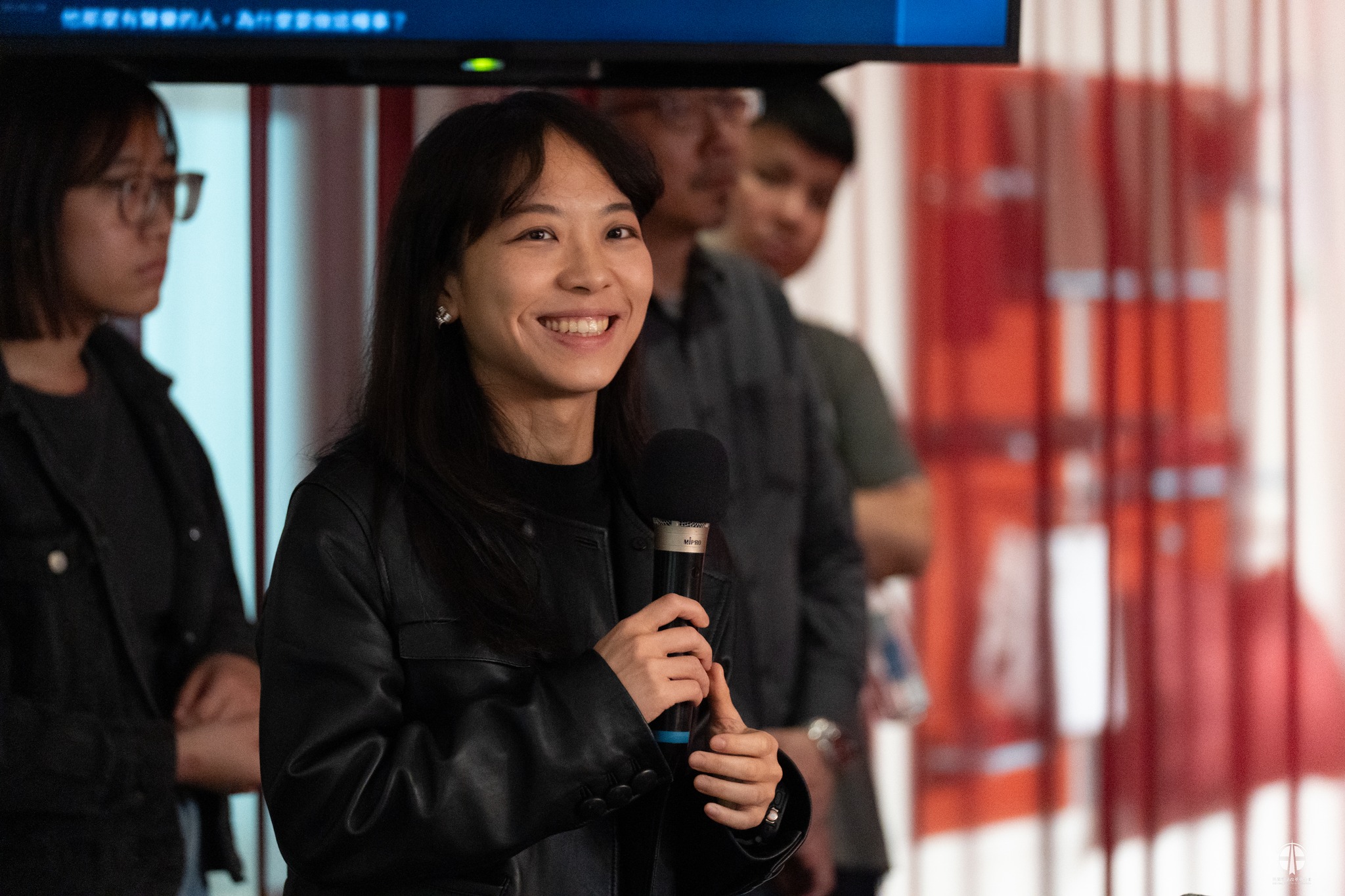

Lee Tzu Tung
Lee Tzu Tung (李紫彤) is a queer feminist artist from Taiwan whose work explores trauma, politics, and economic activism through digital and socially-engaged practices.
Politically active, Lee organized Café Philo Chicago (2016–2018) and participated in Overseas Taiwanese for Democracy. They were a key organizer for major rallies in Taiwan’s 2016 civic movements – including Anti-Black Box Education, Marriage Equality, and Passage of Time (Indigenous protest) – and have spoken out in Taiwan’s #MeToo movement.
A graduate of MIT and the School of the Art Institute of Chicago, Lee’s works have been exhibited widely, including at the National Taiwan Museum of Fine Arts, MIT Museum, Hyundai Motor Studio Beijing, Asymmetry Foundation UK, and Skövde Art Museum Sweden. They are the founder of Tinyverse NPO, which supports collaborations between artists and engineers in care-focused projects.
https://www.tzutung.com/
https://www.instagram.com/l.tzutung/reels/
Related links:
Glossary: https://b97607044.github.io/BOTAMEVE_Glossary/
GBV cases Lawyer chatbot: https://prima-facie-2026.zeabur.app/
Bioart Society
Bioart Society (BAS) is a Helsinki-based association working at the intersection of art, science and society. Established in 2008, the association has close to 200 members in Finland and other countries. Bioart Society is committed to developing, producing and facilitating activities around art and natural sciences with an emphasis on biology, ecology and life sciences.
https://bioartsociety.fi/
https://www.instagram.com/bioartsociety/
Everyday Priorities – Art, Technology and Accommodations
Everyday Priorities – Art, Technology and Accommodations is a series of gatherings and new artistic commissions that explore, experiment with, and put into action alternative ways of commissioning, producing, and presenting artistic work, media art as well as dialogic and performative practices. The programme prioritizes equity, making space, and access (needs and desires).
The histories of disability justice within arts and culture have been continuously marked by an ebb and flow of attention toward disability arts, without centering the urgent need to maintain access beyond the changing tendencies. Even as cultural organizations begin to recognize that disability equity requires ongoing, transformative (un)learning and infrastructural change, fundamental questions remain: how is space made to uphold the right to mobility and access to information and technologies for radical expression by artists and their communities?
Building upon and working alongside the efforts of those who have long been engaged at the intersection of art, technology, body politics, and transformative disability justice, the programme asks in what ways are artists, activists and thinkers addressing the material and accessibility problems that are deeply rooted in the violent logic of hegemonic power structures – which erases certain bodies deeming them disposable?
 Read previous