
Technologies of Polytemporality – Workshops, Lectures & Screenings

1–3 December 2026, Helsinki
Open to everyone. Free entry – sign up to secure your spot. In English, with AI-based captioning for the lectures.
Sign up for all events / Watch the livestream of the lectures on 2 December
Workshops at AV-arkki, Töölönkatu 11 A
Tue 1 Dec, 10.00–13.00: Chipo Mapondera, Alternative AI Temporalities
Thu 3 Dec, 10.00–13.00: Paola Torres Núñez del Prado, The Future Is Behind Us
Lectures and an edible food installation at Cinema Orion, Eerikinkatu 15
Wed 2 Dec, 12.00–16.00
Artist and researcher Paola Torres Núñez del Prado's lecture and conversation with curator Taru Elfving/ Artist Marja Helander's lecture and conversation with curator Orlan Ohtonen / 100 Spoons, 100 degrees, a food installation by Kitchen Testimonies in dialogue with Dahlia El Broul / Artist and creative technologist Chipo Mapondera's lecture and conversation with senior researcher Matti Pohjonen
Screening at Cinema Orion – Thu 3 Dec, 15.30–18.30
AI: African Intelligence by Manthia Diawara
with the prelude Máilmmittkus by Arttu Nieminen & Hans Pieski
Access information: Cinema Orion / AV-arkki
Workshops & Lectures info
Paola Torres Núñez del Prado
Workshop – The Future Is Behind Us: Knotting Polytemporal Technologies
Thu 3 Dec, 10.00–13.00, AV-arkki, Töölönkatu 11 A, Helsinki
A three-hour hands-on workshop for new media students and young artists.
Participants make their own khipus, the knotted-cord recording system of the Andes, and learn the logic behind them: how cords, colours, knot types and positions carry meaning, and how the khipu worked as a technology of real-time knowledge production depending on memory, speech and community. Making is woven together with discussion on what it means to think of technology as a practice rather than a tool, and on time understood not as a straight line but as layers that co-exist. In the final part, participants try the artist’s Quipu Values system, a small, low-energy AI that reads knots as values and produces sound only when people act together. No prior experience needed, and all materials and devices are provided.
Lecture – The Future Is Behind Us: Knotting Polytemporal Technologies
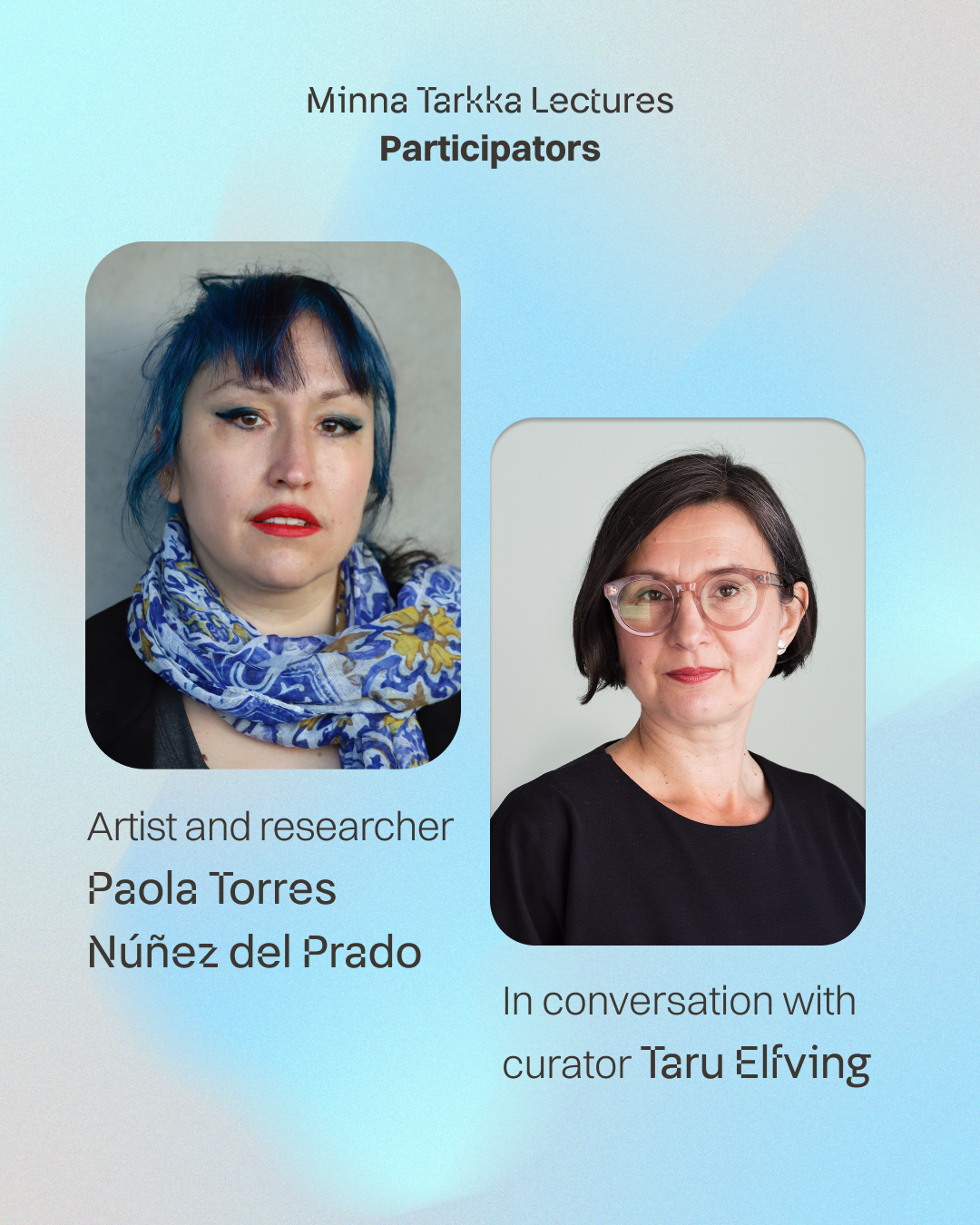
Lecture by artist Paola Torres Núñez del Prado, followed by a conversation with curator Taru Elfving
Wed 2 Dec, 12.15–13.15, Cinema Orion, Eerikinkatu 15, Helsinki
In the Aymara notion of qhipa nayra, the past lies ahead, in view, while the future is behind us, unseen. Paola Torres Núñez del Prado’s practice starts from this to approach technology not as a linear march of progress but as a knot where ancestral knowledge, present bodies and future imaginaries are tied together. Drawing on her frameworks of Andean Technogenesis and the neokhipukamayoq, she presents the khipu, the Andean knotted-cord system, as a technology of real-time, generative knowledge production that depends on memory, orality and community. Through works such as The Singing Textiles: Weaving Life, where living lichens, conductive threads and Edge AI form a sonic ecosystem whose value depends on the survival of its organisms, she discusses technologies that run on lichen time, communal consensus and reciprocity (ayni) rather than extraction.

Bios
Paola Torres Núñez del Prado is a Peruvian artist and researcher based in Stockholm, working across textiles, sound, bio-art and artificial intelligence. Over nearly two decades, her practice has rethought computation through Andean epistemologies, especially the khipu, the knotted-cord recording system of the Andes. Within the frameworks she calls Andean Technogenesis and the neokhipukamayoq practice, she develops living textile systems that integrate lichens, conductive threads and electronics, as well as computational analyses of historical khipu and sound installations. She is a doctoral researcher in the Media department at Stockholm University of the Arts (SKH), where she leads the KAIA Critical AI Working Group.
Taru Elfving is a Helsinki-based curator and writer committed to nurturing undisciplinary and site-sensitive enquiries at the intersections of ecological, feminist and decolonial practices. As director of CAA Contemporary Art Archipelago she currently leads a research residency programme on the island of Seili in the Baltic Sea in collaboration with the Archipelago Research Institute, University of Turku (FI). Her curatorial projects include Borås Art Biennial (2026), Research Pavilion (Uniarts, Helsinki, 2023), Hours, Years, Aeons (Finnish Pavilion, Venice Biennale 2015), Frontiers in Retreat (HIAP 2013-18), Contemporary Art Archipelago (Turku 2011 European Capital of Culture), and Towards a Future Present (Lofoten International Art Festival 2008). She has published internationally and co-edited publications such as Contemporary Artist Residencies (Valiz, 2019). She has a PhD from Visual Cultures, Goldsmiths University of London.
Marja Helander
Lecture – All at Once – On Cyclical Time and Multiple Exposures
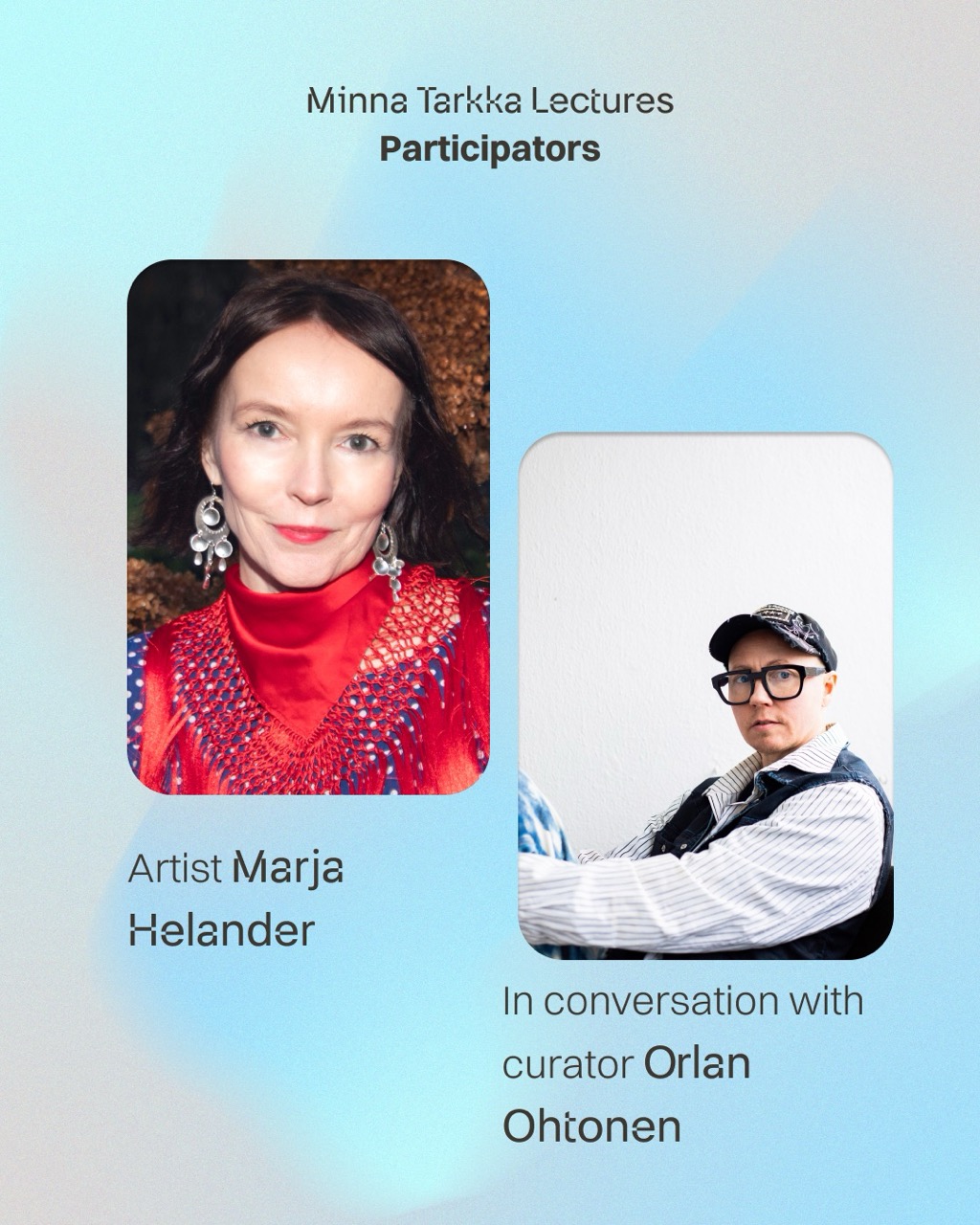
Lecture by artist Marja Helander, followed by a conversation with curator Orlan Ohtonen
Wed 2 Dec, 13.30–14.30, Cinema Orion, Eerikinkatu 15, Helsinki
In this lecture, Marja Helander will discuss how photography and film can make different times and generations visible simultaneously, and what this reveals about the Sámi understanding of time as cyclical.
The Sámi understanding of time, like that of many other Indigenous Peoples, is often perceived as cyclical, unlike the linear Western conception of time, with a beginning and an end. In many places, Indigenous Peoples’ livelihoods are closely connected to nature and to its annual cycles. For the Sámi, this is particularly true of the annual cycle of reindeer herding and the way of life it entails. The traditional Sámi calendar has eight seasons, rather than four. In her own mind, Helander visualises the year as a circle, with the turn of the year at the top, just below the chin. From there, the cycle moves down the right-hand side towards summer, and then back up along the other side through autumn and winter.
In her photographic art, Helander has explored this understanding of time in various ways, including through multiple exposures and moving characters through different stages of their lives simultaneously. In this way, Helander brings into her images the idea that different eras, and the generations that belong to them, are also present now. She has also incorporated this idea into her most recent short film with Liselotte Wajstedt.

Bios
Marja Helander is a Sámi photographic and video artist from Finland. Her photographs of the Fennoscandia region explore the impact of mining on the sensitive northern nature. Helander emphasises the dependence between people and nature. Helander’s video works are playful, exploring the contradiction between the traditional Sámi way of life and modern society.
Her short film Birds in the Earth won the Risto Jarva Prize at Tampere Film Festival (2018) and screened in competition at Sundance (2019), while Mu gieđas – In My Hand (2025), co-directed with Liselotte Wajstedt, won the Tromsø Palm. Helander has exhibited widely in Finland and abroad, and her works are held in major public collections, including Kiasma and the National Gallery of Canada. She received the Finland Prize in 2019 and the Pro Finlandia medal in 2021.
Orlan Ohtonen is a curator and writer based in Helsinki, Finland, currently holding the position of Curator of Exhibitions at the Finnish Museum of Photography. Ohtonen has been building self-organised platforms for intersectional curatorial practices as part of the collective ‘nynnyt’; as Co-Founder of feminist and anti-racist workspace Poimu; as Co-Founder and Co-Director of Feminist Culture House; and as Co-Founder and Co-Organiser of trans cultural sauna event series Sweat and Tears. He holds an MA in Curating, Managing and Mediating Art from Aalto University (2015) and an MA in Fine Art from Central Saint Martins, London (2006).
His curatorial practice and research are focused on investigating how trans and queer temporality, abolitionist politics, and activist curatorial praxis can generate transformative models of institutional change within contemporary museums. Ohtonen has written about the relationship between curatorial activism and cultural politics for several art publications, and is the Lead Editor of Curating & Repair, published in 2026 by 1000Words.
Chipo Mapondera
Workshop – Alternative AI Temporalities: Developing Community-Led Technologies Through Art Practice and Indigenous Knowledge
Tue 1 Dec, 10.00–13.00, AV-arkki, Töölönkatu 11 A, Helsinki
How might Indigenous knowledge, cultural practices and community imagination inform alternative approaches to AI development? Drawing on KUCHEMA, Chipo Mapondera’s artistic research project engaging with water, ecology and ancestral knowledge across Zimbabwe, Tunisia and Finland, this participatory workshop explores methods for developing culturally situated and relational technologies.
Through case studies, discussion and creative exercises, participants will examine how orally transmitted knowledge, ritual practices, environmental stewardship and community-generated materials can inform alternative approaches to AI development. Bringing together perspectives from art, technology and Indigenous knowledge, the workshop invites participants to rethink technology beyond current systems, temporalities and values, and collectively imagine AI futures grounded in care, reciprocity, cultural context and community agency.
Lecture – KUCHEMA: Artistic Practice and Ancestral Temporalities for Alternative Technological Futures
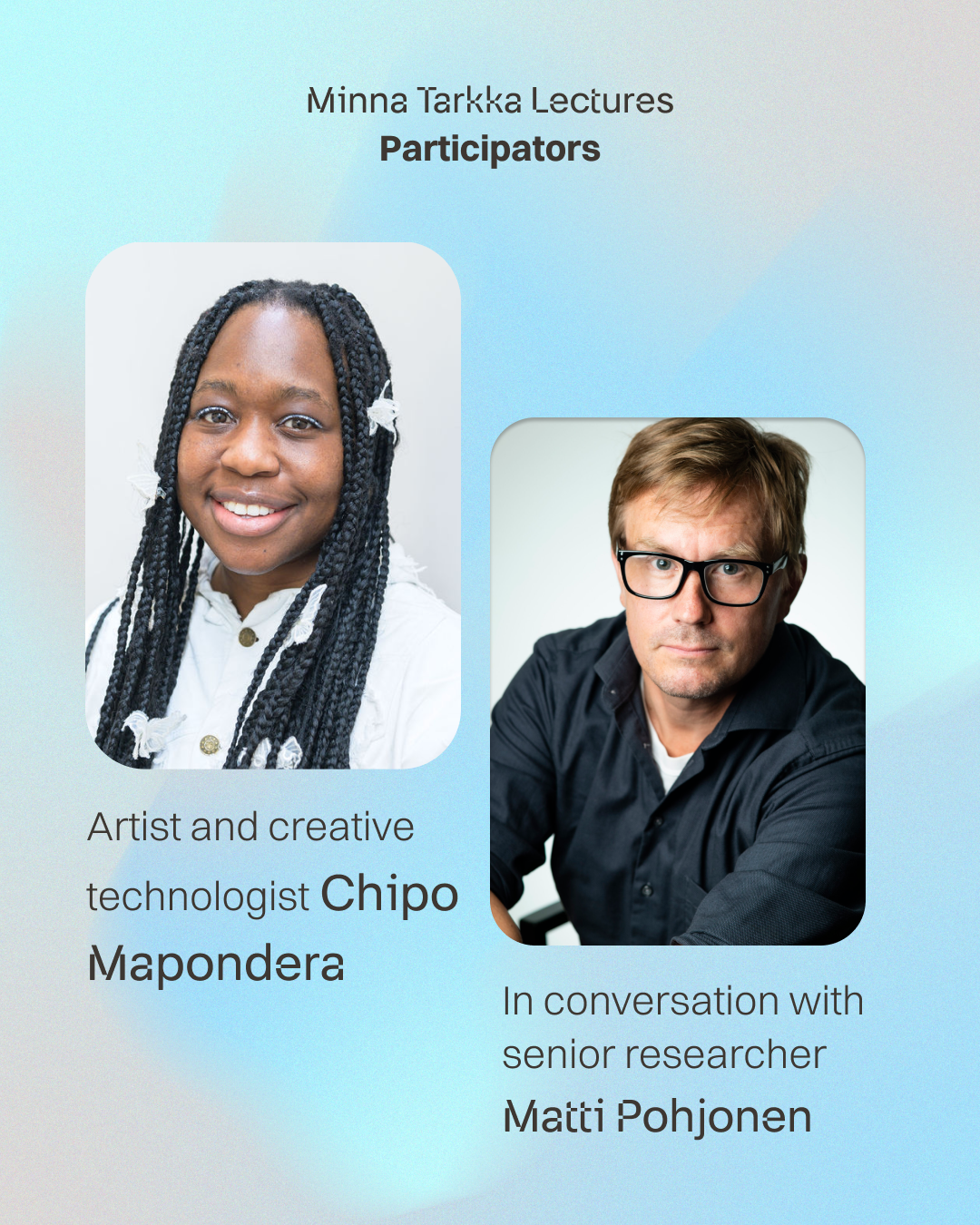
Lecture by creative technologist Chipo Mapondera, followed by a conversation with senior researcher Matti Pohjonen
Wed 2 Dec, 15.00–16.00, Cinema Orion, Eerikinkatu 15, Helsinki
What might technology become when it is shaped by ancestral knowledge, ecological relationships and collective future imaginaries? KUCHEMA is an artistic research project by Chipo Mapondera that has connected with communities in Zimbabwe, Tunisia and now in Finland. This lecture presents this project and explores Indigenous relationships with water, spirituality and ritual as living knowledge systems and ancestral technologies that connect past, present and future. By bringing these situated perspectives and temporalities into dialogue, we consider how AI might move beyond colonial and capitalist models of extraction towards relational, reciprocal and community-governed technological futures.

Bios
Chipo Mapondera is a Zimbabwean artist and creative technologist whose practice reimagines AI and immersive technologies through Indigenous knowledge, ritual and ceremony. Working across immersive installation, film, sound and interactive media, she creates embodied experiences that explore water, climate, cultural memory and alternative technological futures rooted in care, reciprocity and ancestral ways of knowing. Her work emerges through community co-creation and long-term collaborations with Indigenous and local communities. In 2026, as part of NEW INC Y12 at the New Museum in New York, Mapondera launched KUCHEMA, a multi-country artistic research project activating Indigenous water knowledges with emerging technologies.
Matti Pohjonen is a Senior Researcher and Research Fellow in AI in Social Research on Diversity at the University of Helsinki, where he develops new methods for understanding emerging digital politics across global media contexts and explores the philosophical questions raised by AI as a new form of knowledge production. He has more than ten years of university teaching experience and received the SOAS Director’s Teaching Prize for Innovative Teaching in 2020.
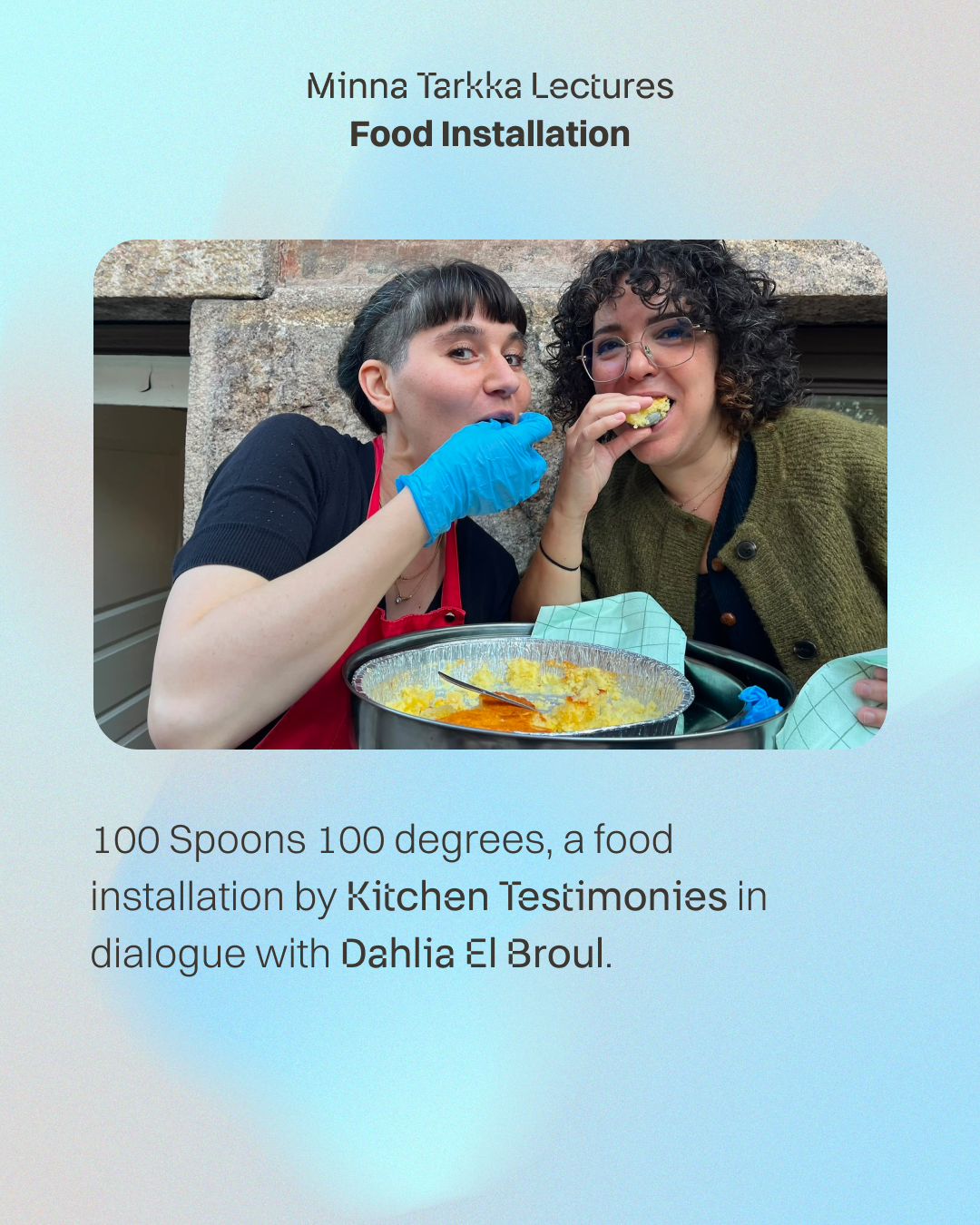
100 Spoons 100 degrees, a food installation by Kitchen Testimonies in dialogue with Dahlia El Broul
Wed 2 Dec, 14.30–15.00, Cinema Orion, Eerikinkatu 15, Helsinki
When did you last consider your needs around food? Doğa Çal’s Kitchen Testimonies, in dialogue with curator Dahlia El Broul, asks audiences to examine the tools, habits and interdependencies shaping how we arrive at the table. In her essay The Carrier Bag Theory of Fiction, Ursula K. Le Guin suggested humanity’s first tool was likely a vessel for gathering and sharing, not a weapon. Today, technologies around food are a lifeline for some bodies; for others, an “optimisation” no one asked for. Audiences are invited to discuss how technology meets and transforms our needs, and what a technology of care might look like.
Part of the lecture programme, no separate registration. Dietary needs can be noted when registering for the lectures.

Bios
Doğa Çal is a Helsinki-based artist who cooks and works with video, installation, and performance, responding to sites and situations to explore belonging, care, disability, and accessibility with people. Drawing on her own experiences of living with type 1 diabetes and coeliac disease, Doğa cooks to hold an active space for different dietary needs and restrictions at social gatherings. Through Kitchen Testimonies, her cooking moves between creative catering, pop-ups, and artistic inquiry, exploring how food is prepared, shared, and experienced, and how the conditions of eating together might be reconsidered.
Dahlia El Broul is a curator, educator, and artist based in Espoo, originally from New York City. Her work moves across cultural production engaging with critical political inquiries, pedagogy, publishing, and collective imaginaries through feminist and dialogical methods. She has curated exhibitions in Helsinki and New York; most recently Something in the Mouth (2026) at Asbestos Gallery and Multitudes of Blue (2025) at Photographic Gallery Hippolyte. Dahlia is currently completing her doctorate at the HFBK Hamburg, supported by the Kone Foundatio.

Screening – AI: African Intelligence and Máilmmittkus
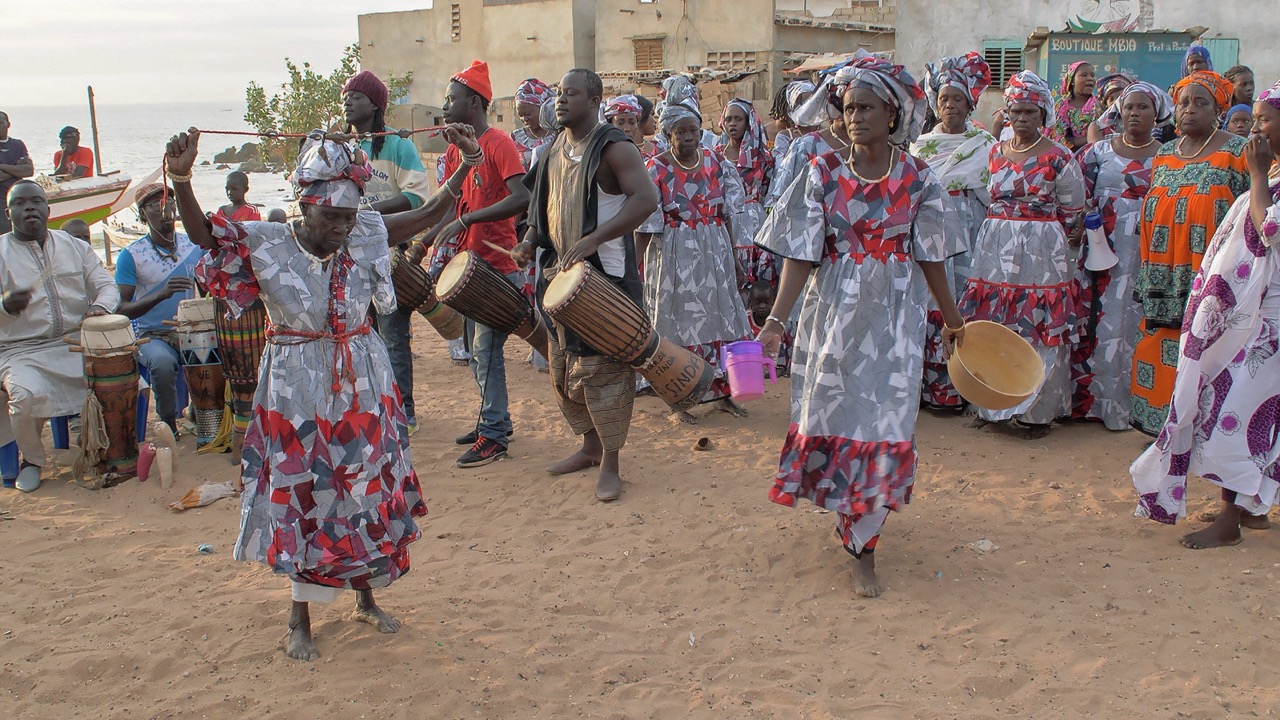
The programme closes with a screening of the essay film AI: African Intelligence by Manthia Diawara. The film explores the contact zones between African rituals of possession within traditional fishing villages of the Atlantic coast of Senegal and the emergence of new technological frontiers known as artificial intelligence.
As a prelude to the film, we show Máilmmittkus by Arttu Nieminen and Hans Pieski, a surreal journey into the complex relationship between Indigenous Peoples and the unstoppable force of technological progress. The film depicts various stages of technological development and their impact on Indigenous populations.
Thu 3 Dec, 15.30–18.30, Cinema Orion, Eerikinkatu 15, Helsinki
AI: African Intelligence
Manthia Diawara’s essay film AI: African Intelligence explores the contact zones between African rituals of possession in traditional fishing villages on the Atlantic coast of Senegal and the emerging technological frontier known as artificial intelligence. Considering the confluence of tradition and modernity, Diawara asks how we could move from disembodied machines towards a more humane and spiritual control of algorithms. Could Africa be the context in which such improbable algorithms emerge?
AI: African Intelligence
2022, Portugal, 110 min
Production: Jürgen Bock, Lumiar Cité/Maumaus
Camera: James Newitt
Sound: Bernardo Theriaga
Editing: Mohamed Al Mubarak
With Mère-Bi (Marymata Seck), Diyé Dia, Raoul Frese, Makhou Lebougui, Jean-Paul Colleyn, Mamadou Diouf, Hadja Dramé, Marieme Seck, Oulimata Ndoye, Awa Diop, Mame Yaame and Marieme Diallo.
Máilmmittkus / At the Shadow of the World
Máilmmittkus / At the Shadow of the World is a surreal journey into the complex relationship between Indigenous peoples and technological development. The work examines different stages of technology and their impact on Indigenous life, culture, and relationship to the land.
Modern technology is often seen as undermining sustainable, land-based ways of life. At the same time, the Sámi have also, at least in part, adopted and made use of technological transformation. The work moves within this tension and asks what kind of relationship contemporary technology has with Sámi culture today. Is it still possible to detach from technology, and under what conditions is participation in it morally justified, if the environment at the same time bears the consequences?
Underlying the work is Niillas Holmberg‘s poetic reflection on the rapid integration of technology into Indigenous culture, setting ancestors and descendants, a slower way of life and the hectic present, living tradition and a world in which everything seems to become measurable, efficient, and commercialised against one another. The motorisation of reindeer herding in particular serves as an example of a development in which a technology adopted by one compels others to follow. When a livelihood becomes more expensive, it must also become profitable, and the trap closes.
Máilmmittkus – At the Shadow of the World
2025, Finland, 9 min
Directed by Arttu Nieminen and Hans Pieski
Script: Niillas Holmberg, Hans Pieski, Arttu Nieminen
Cinematography: Arttu Nieminen, Hans Pieski
Editing and sound design: Arttu Nieminen
Music: Amandaid, Veera Neva
Production: Arttu Nieminen / R2 Productions Ky
Supported by Arts Promotion Centre Finland, Frame Contemporary Art Finland, AVEK, the International Sámi Film Institute (ISFI) and the Finnish Film Foundation.
Bios
Manthia Diawara was born in Mali, West Africa. He is a distinguished Professor of Comparative Literature and Film at New York University.
Manthia Diawara is a prolific writer and filmmaker. His essays on art, cinema and politics have appeared in The New York Times Magazine, LA Times, Libération, Mediapart, October and Artforum. He is the author of two acclaimed memoirs: In Search of Africa (Harvard University Press, 2000) and We Won’t Budge: An African in the World (Basic Books, 2008). He has published several books on African and African American cinema. Diawara’s notable films include: Angela Davis: A World of Greater Freedom (2023), AI: African Intelligence (2022), A Letter from Yene (2022), An Opera of the World (2017), Negritude: A Dialogue between Soyinka and Senghor (2016), Édouard Glissant, One World in Relation (2010), Maison Tropicale (2008) and Rouch in Reverse (1995).
Arttu Nieminen, a Finnish media artist from Rovaniemi, creates works that are described as mysterious, flowing, and meditative. His pieces take on hallucinatory shapes, offering dreamy odes to the mystical aspects of nature and inviting viewers to explore the forest with fresh eyes.
Hans Pieski, a Sámi filmmaker from Utsjoki, crafts captivating and unique visual narratives with a surreal twist that dives in the intersection of indigenous culture and the Arctic environment.
About the Minna Tarkka Lectures series
Minna Tarkka Lectures is an experimental public forum and learning initiative that amplifies critical practices in the arts and media and opens debate on the artistic, social and technological currents of our time. Since 2024, the annual programme has created space for dialogue on the role of art and media as active contributors to civil society, at a time when democratic life faces serious challenges.
Minna Tarkka Lectures 2026 is produced by M-Cult, Media Culture and Art Agency, in collaboration with AV-arkki, Centre for Finnish Media Art, and Aalto Media Lab, supported by the Finnish Arts and Culture Agency. The programme is realised in partnership with Hotel Ax.
 Read previous